
The Ultimate Cape Town Kayaking Adventure
Experience Cape Town’s breathtaking coastline from a unique vantage point on a guided kayaking tour along the iconic Table Bay.
Free cancellation: You can cancel up to 24 hours in advance of the experience for a full refund.
Tracey_C
★★★★★
The whole experience was amazing. Being out on the water and the scenery from a different viewpoint was exceptional. We felt safe and in good hands. Thank you for a wonderful experience.
- Recommended by 98% of travelers
- Badge of Excellence
- Lowest Price Guarantee
What this Kayaking tour includes
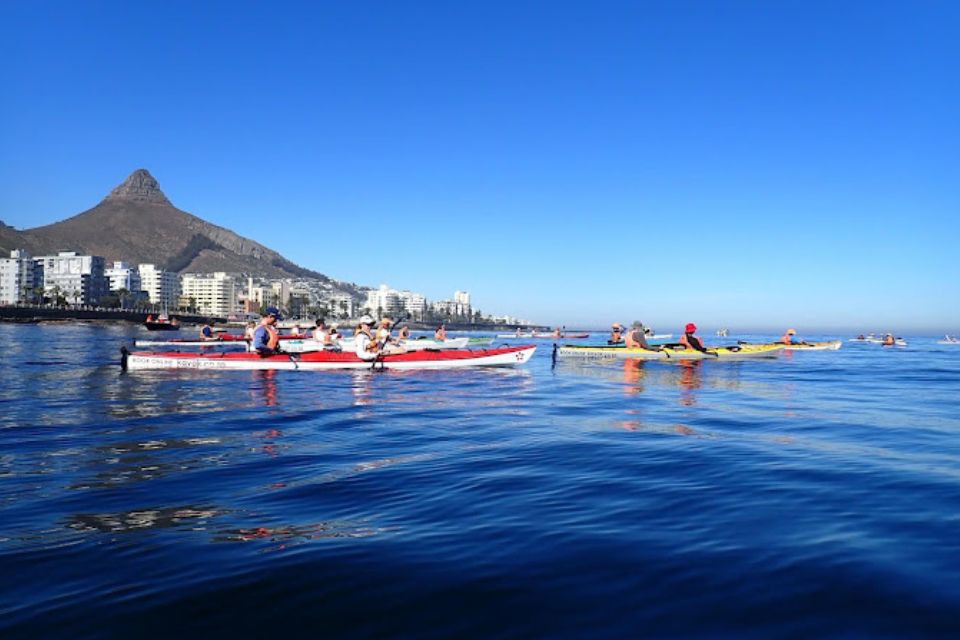
- Guided kayaking tour along Cape Town’s scenic coastline
- All necessary kayaking and safety equipment
- Professional guide with local expertise
- Small group size, capped at 12 participants for a personalized experience
- Multiple departure times for flexibility
- Chance to see iconic landmarks: Table Mountain, Signal Hill, Lion’s Head, and the Twelve Apostles
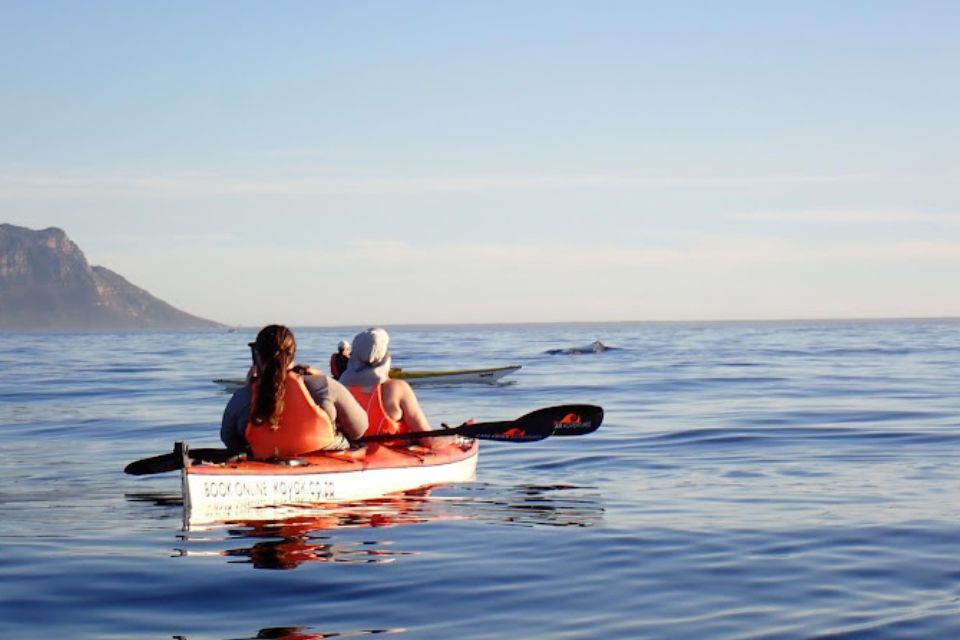
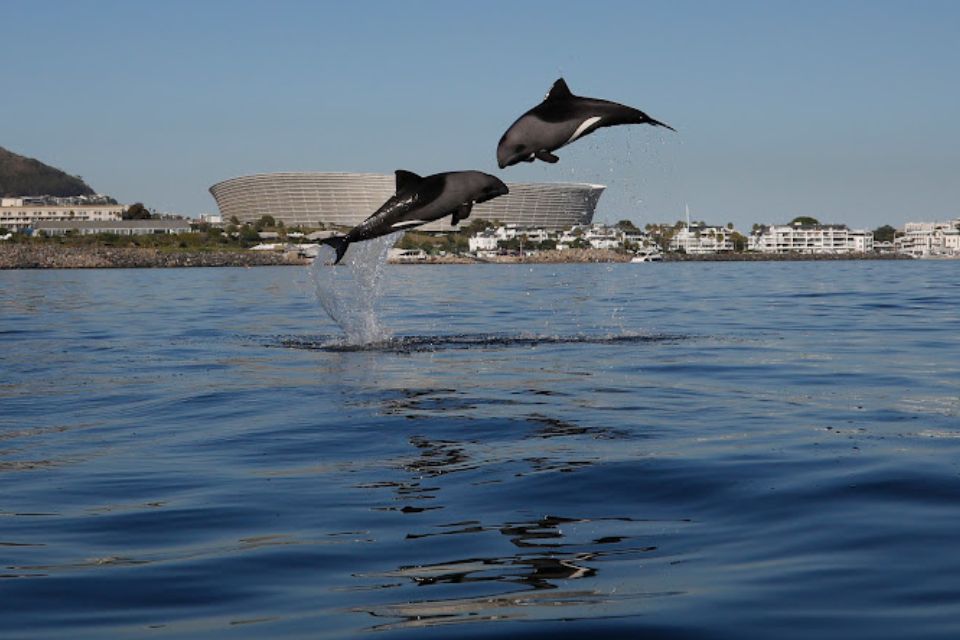
- Opportunity to spot Heaviside’s dolphins and other local marine life
- Convenient launch location at Three Anchor Bay
Discover Cape Town like never before
Discover Cape Town like never before on this exhilarating kayaking adventure, where you’ll paddle along the vibrant coastline and take in some of the city’s most stunning natural landmarks from the water. This unique perspective allows you to fully appreciate the majestic Table Mountain, the rugged cliffs of Lion’s Head, and the beautiful Twelve Apostles as they rise dramatically against the skyline. As you glide across the waves, feel the refreshing sea breeze and keep an eye out for the friendly Heaviside's dolphins, often seen playfully accompanying kayakers
Free cancellation up to 24 hours before the experience starts (local time)
What to expect
- Launch from the scenic Three Anchor Bay, with kayaks ready on the beach
- A 3–5 km guided paddle along the Table Bay coastline
- Uninterrupted views of Table Mountain, Signal Hill, Lion’s Head, and the Twelve Apostles
- Routes that may lead toward either Clifton or the V&A Waterfront
- Frequent encounters with Heaviside’s dolphins, especially on calm summer mornings
- Opportunities to pass by local landmarks like the Green Point Lighthouse and historic shipwrecks
- A small group setting for a more personalized experience
- An invigorating sea breeze and breathtaking photo opportunities
What is Kayaking?
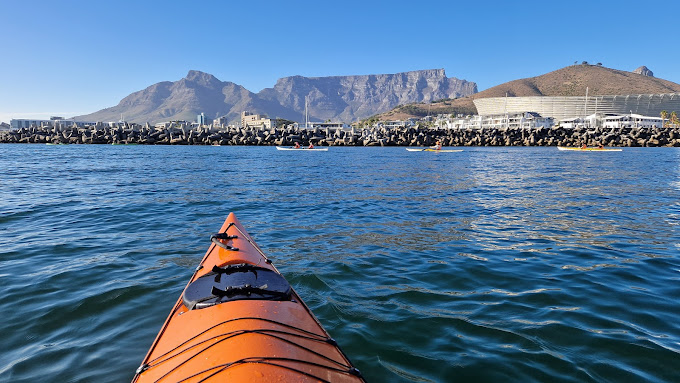
Kayaking is a water-based activity that involves paddling a small, narrow watercraft, known as a kayak, using a double-bladed paddle.
Unlike canoes, kayaks sit low in the water and are often designed with a closed deck, allowing for more control and agility on the water.
Traditionally, kayaks were developed by indigenous Arctic populations for hunting and fishing, and they were crafted from wood and animal skins to glide silently across icy waters.
Today, kayaking has evolved into a versatile recreational activity enjoyed worldwide, offering both relaxing and adventurous experiences on lakes, rivers, and oceans.
Kayaking is suitable for all ages and skill levels, making it an accessible way to explore natural landscapes and experience wildlife up close.
Sea kayaking, for example, provides a unique vantage point to appreciate coastal scenery, allowing kayakers to paddle close to shorelines, rocky coves, and hidden beaches.
River kayaking, on the other hand, offers thrilling adventures as paddlers navigate flowing waters, rapids, and obstacles, requiring more advanced skills in maneuvering and balance.There are even specialized forms of kayaking, like whitewater kayaking, which involves navigating challenging rapids, and kayak touring, where paddlers embark on extended trips and sometimes camp along the way.
Beyond the physical benefits, such as improved strength, flexibility, and endurance, kayaking provides a sense of tranquility and connection to nature.
Gliding over calm waters, surrounded by stunning landscapes, allows kayakers to escape the hustle and bustle of daily life. It encourages mindfulness, as paddlers focus on each stroke, the rhythm of the water, and the sights and sounds around them.
Whether enjoyed solo or as part of a group, kayaking offers a harmonious blend of exercise, exploration, and relaxation, making it a cherished pastime for outdoor enthusiasts.